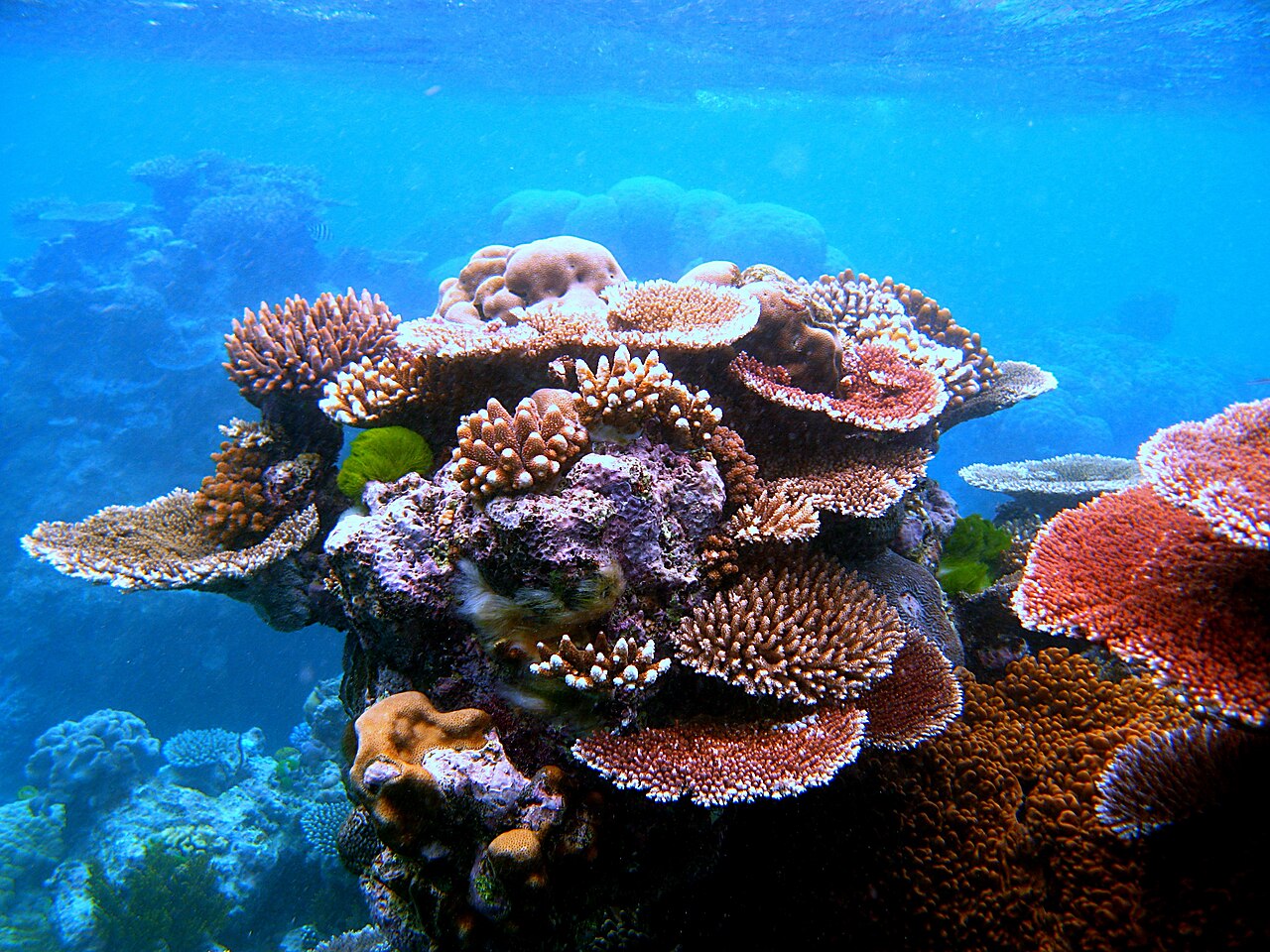
The International Union for Conservation of Nature (IUCN) published a comprehensive risk assessment warning that the world’s coral reef ecosystems face a catastrophic threat of collapse by the year 2075 if marine warming and ocean acidification trends continue on their current trajectory.
The global conservation authority, which tracks environmental indicators and species viability across more than 160 nations, delivered the findings following extensive ecological modeling across the Atlantic, Pacific, and Indian Oceans. According to the scientific evaluation detailed in a Newagebd.net dispatch, reef ecosystems that sustain a quarter of all marine life are deteriorating at an unprecedented rate under persistent marine heatwaves and human industrial pressures.
The finding reflects an urgent warning for international environmental ministries, coastal management agencies, and marine research institutes. Decades of local conservation measures are no longer sufficient to offset global thermal anomalies driven by greenhouse gas concentrations.
The Mechanisms Driving Large-Scale Coral Mortality
Coral reefs function as living biological structures built primarily by colonies of tiny animals called coral polyps. These organisms live in a delicate, symbiotic relationship with microscopic algae known as zooxanthellae, which inhabit the coral tissue, generate vital nutrients through photosynthesis, and give corals their distinctive coloration.
When surface sea temperatures climb as little as one to two degrees Celsius above historical summer maximums for extended intervals, the physiological bond breaks down. Corals become stressed and expel the algae, leaving their translucent limestone skeletons completely exposed in a phenomenon known as coral bleaching.
Bleached corals do not die instantly, but they are starved of metabolic energy, leaving them vulnerable to infectious diseases and structural starvation. The environmental baseline reporting from New Age BD indicates that consecutive mass bleaching events over the past decade have stripped reefs of their typical recovery windows. Historically, healthy reefs required 10 to 15 years between thermal spikes to regenerate lost biomass, but recent back-to-back oceanic heatwaves have shortened those intervals to mere months in sensitive tropical belts.
Compounding the thermal stress is ocean acidification. As the oceans absorb roughly 30 percent of human-generated carbon dioxide emissions, seawater undergoes a chemical shift that lowers its pH balance. This shift decreases the availability of carbonate ions, the fundamental chemical building block corals require to calcify and expand their protective hard skeletons.
Economic and Ecological Stakes for Coastal Communities
While coral reefs cover less than 0.1 percent of the total ocean floor, their biological productivity rivals that of tropical rainforests. Marine biologists estimate that more than 4,000 fish species, along with hundreds of mollusks, crustaceans, and marine mammals, depend directly on structural reef environments for feeding, spawning, and predator protection.
The human economic exposure is equally severe. Coastal fisheries across Southeast Asia, the Caribbean, the South Pacific, and East Africa generate billions of dollars annually, serving as the primary source of animal protein for roughly one billion people. The structural loss of foundational reefs removes the nursery grounds that sustain pelagic fishing fleets and domestic coastal commerce.
Beyond food production, healthy barrier reefs function as natural breakwaters, absorbing up to 97 percent of the kinetic wave energy generated by offshore storms, cyclones, and high tides. Low-lying island nations and densely populated coastal plains rely on these physical barriers to prevent chronic shoreline erosion and saltwater intrusion into freshwater aquifers.
According to economic projections referenced in the IUCN findings published by New Age BD, replacing natural coral breakwaters with artificial concrete sea walls would cost tens of billions of dollars per nation—an expenditure far beyond the fiscal reach of most developing maritime states.
Technological Monitoring and Scientific Intervention Efforts
Marine scientists and environmental research consortia have turned to advanced data collection platforms to monitor and respond to reef degradation. Orbiting environmental satellites run by meteorological agencies track sea surface temperature anomalies in near-real time, allowing automated models to predict thermal stress weeks before visual bleaching occurs.
Autonomous underwater vehicles (AUVs) equipped with high-resolution multispectral cameras now map vast sections of the Great Barrier Reef and the Mesoamerican Reef. These underwater imaging systems feed photographic datasets into specialized machine vision models to quantify live coral cover, spot invasive crown-of-thorns starfish outbreaks, and measure structural erosion far faster than human scuba surveys permit.
Simultaneously, laboratory researchers are testing selective breeding programs aimed at identifying "super corals"—specific genetic strains that have naturally survived in hyper-warm environments such as the Red Sea and Persian Gulf. Cultivated in climate-controlled marine nurseries, these micro-fragments are transplanted onto degraded substrate to test whether heat-tolerant traits can be introduced into vulnerable native populations.
Despite localized successes in coral farming and active gene-banking initiatives, conservation engineers caution that biological propagation programs remain limited by scale. Field projects operate on the order of several hectares, whereas modern marine heatwaves span hundreds of thousands of square kilometers simultaneously.
Policy Deadlines and Unresolved Conservation Questions
The IUCN warning places an acute focus on upcoming international climate negotiations under the United Nations Framework Convention on Climate Change (UNFCCC) and the Convention on Biological Diversity (CBD). Signatory nations previously pledged under the Kunming-Montreal Global Biodiversity Framework to protect 30 percent of the planet's terrestrial and marine ecosystems by 2030.
Marine conservationists argue that designating Marine Protected Areas (MPAs) cannot insulate coral beds from elevated global water temperatures. While MPAs successfully stop destructive anchor damage, overfishing, and localized sewage dumping, they cannot alter regional thermal regimes driven by atmospheric greenhouse gas accumulation.
The decisive deadline remains the year 2075 identified in the report. Scientists and environmental ministers must now determine whether emissions mitigation plans can reduce thermal warming rapidly enough to preserve existing genetic diversity in wild reefs, or whether global policy must shift toward preserving coral gene banks and captive specimens before natural wild ecosystems experience functional collapse.