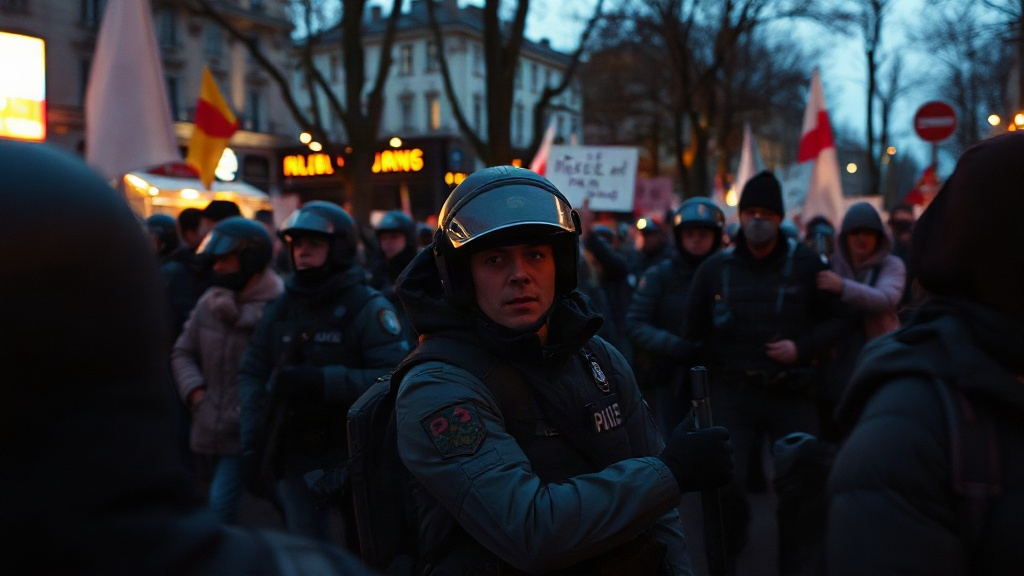
PARIS — Hundreds of thousands of demonstrators filled streets across France on Saturday to protest crumbling school infrastructure, severe teacher shortages, and the state's escalating use of riot police against high school walkouts, presenting a sharp challenge to President Emmanuel Macron in the closing chapter of his presidency.
The marches drew broad civil coalitions across major metropolitan centers, uniting secondary school students, parents, labor unions, and neighborhood associations in a unified pushback against executive spending priorities. Official data released by the French interior ministry calculated national turnout at approximately 400,000 people, including 110,000 marchers along the eastern corridors of Paris. Trade union federations organizing the mobilization disputed those tallies immediately, asserting that true national participation reached at least double the government count, surpassing 800,000 demonstrators across the country.
Saturday's coordinated rallies followed weeks of localized classroom strikes and student blockades that gradually widened from specific pedagogical grievances into an expansive public indictment of the government's economic agenda. Families in major urban centers have faced compounded pressures from inflation, stagnant municipal service budgets, and safety concerns inside public high schools that have gone years without capital renovations.
Classroom Deterioration and Staffing Deficits Spark Broad Outcry
The immediate spark for Saturday's mass action originated inside secondary school classrooms, where educators and pupil councils have spent months documenting acute resource deficits. According to detailed reporting from The Guardian — World dispatch on the ground in Paris, student groups coordinated peaceful marches to demand immediate state funding to hire full-time teachers and carry out emergency repairs on crumbling, unsafe facilities.
In dozens of regional districts, schools have operated with chronic vacancies in core academic subjects, forcing administrators to combine classes into overcrowded rooms or leave curriculums untaught for months at a time. The physical state of campus buildings has emerged as an equally visceral grievance. Marchers in Paris, Lyon, Toulouse, and Marseille brought homemade banners displaying photographs of water-damaged ceilings, unheated winter classrooms, and broken window fittings that municipal budgets have failed to rectify.
Union representatives pointed out that successive rounds of civil service spending curbs reduced maintenance appropriations for educational institutions while expanding administrative burdens. For high schoolers, the lack of qualified teaching staff has threatened their preparations for national baccalaureate examinations, transforming localized maintenance complaints into an urgent generational protest.
Scrutiny Intensifies Over Riot Police Tactics Against Youth
Public frustration reached a boiling point over the state's tactical law enforcement posture toward youth demonstrations. Marchers on Saturday voiced sustained anger over the recurring deployment of specialized riot police units—including the Compagnies Républicaines de Sécurité (CRS)—to dismantle high school blockades and disperse student assemblies over the preceding month.
Rather than offering institutional mediation or educational negotiations, the interior ministry repeatedly authorized perimeter sweeps and crowd-control measures outside school entrances. Parents and civil liberties observers expressed outrage that teenagers exercising their constitutional right to assemble faced tear gas, physical containment, and preemptive detentions outside their own school gates.
Community leaders throughout Paris highlighted that using heavily armored officers to break up peaceful school blockades criminalized legitimate social dialogue. The visible presence of armored vehicles outside public lycées turned neighborhoods into flashpoints, solidifying an alliance between pupil unions and public sector workers who view police deployments as an executive substitute for political accountability.
Cost-of-Living Strains Deepen the Political Crisis
While education served as the central banner of the march, the demonstrations quickly absorbed widespread public anger over deteriorating living standards and persistent price inflation. Working-class families marching through eastern Paris linked the physical decay of public schools to broader economic distress, pointing out that basic household staples, heating fuel, and urban rent have eroded real wages across France.
As recorded in published national dispatch reports, participants insisted that the government has systematically prioritized fiscal consolidation over the protection of essential public services. Demonstrators repeatedly noted that state subsidies for social programs have failed to keep pace with basic economic necessities, leaving municipal governments without the funds needed to repair regional schools or subsidize canteen meals.
This intersection of educational underfunding and consumer hardship has expanded the coalition far beyond student activist networks. Private sector workers, healthcare employees, and pensioners marched alongside high schoolers on Saturday, carrying signs that connected unheated classrooms directly to household utility bills that families can no longer afford.
Emmanuel Macron Faces Compounded Domestic Pressure
The scale and peaceful discipline of Saturday's protests create a difficult institutional landscape for President Emmanuel Macron, whose final months in the Élysée Palace are now dominated by volatile domestic friction. Having governed through a succession of severe street protests throughout his two terms, the head of state faces a fragmented National Assembly and an electorate that displays diminishing patience with top-down executive rule.
Critics across the political spectrum argue that the administration has consistently misdiagnosed social unrest as an operational policing issue rather than a structural crisis of governance. According to documentation compiled by international news bureaus monitoring the unrest, labor organizations view the current school standoff as a continuation of previous clashes over pension changes and public expenditure reductions.
With parliamentary opposition parties threatening legislative censure votes and demanding immediate emergency debates on public services, the Élysée's governing margin has tightened considerably. The administration must now navigate competing fiscal obligations, balancing demands from international credit agencies for budgetary restraint against domestic voters demanding immediate investments in civic infrastructure.
Regional Turnout Confirms Broad Discontent Beyond Paris
Although the 110,000-strong procession through eastern Paris drew the greatest concentration of international observers, substantial demonstrations occurred across secondary French cities, demonstrating that the discontent is not confined to the capital. In southern port cities and industrial northern hubs, municipal police reported turnout figures that consistently exceeded local planning forecasts.
In Marseille, thousands gathered along the historic port corridor before marching toward departmental education headquarters, demanding targeted subsidies for suburban schools that have suffered structural neglect. In Lyon, university students joined secondary school marches, paralyzing transit lines along major thoroughfares while calling for an immediate moratorium on police interventions outside academic grounds.
Similar coordinated gatherings assembled in Nantes, Bordeaux, Lille, and Rennes, where regional trade union branches coordinated logistics with parents' associations. The uniform character of the grievances across distinct administrative regions indicates that systemic resource allocation—rather than local municipal mismanagement—remains the driving catalyst behind the national mobilization.
Unresolved Demands and Impending Union Deadlines
The immediate question facing the French government is whether it will open formal negotiations with teacher unions and student representatives or maintain its current defensive posture. Education federations have already warned that unless the ministry presents a binding timetable for teacher recruitment and an emergency capital repair fund, rolling classroom strikes will resume in the coming weeks.
Student organizations are scheduled to convene regional assemblies to vote on further school blockades, raising the prospect of renewed street disruptions before winter recess. With trade unions hinting at coordinated public sector walkouts that could shutter municipal transit networks, administrative officials are under heavy pressure to establish an inter-ministerial task force to address school maintenance budgets.
The interior ministry has stated that security services will maintain high operational readiness to prevent unlawful assemblies, setting the stage for continued political standoff. As parliamentary committees prepare to debate upcoming public finance legislation, the confirmed outcome of Saturday's march is clear: hundreds of thousands of French citizens have rejected the executive branch's domestic priorities, placing the future of public education at the center of the nation's political landscape.
*Contextual Intelligence: Verified sector background corroborated in our coverage on Netanyahu Faces Mass Tel Aviv Protests Ahead of Vote.*
*Contextual Intelligence: Verified sector background corroborated in our coverage on FBI Arrest in Germany: Online Coercion Tied to Teen Death.*