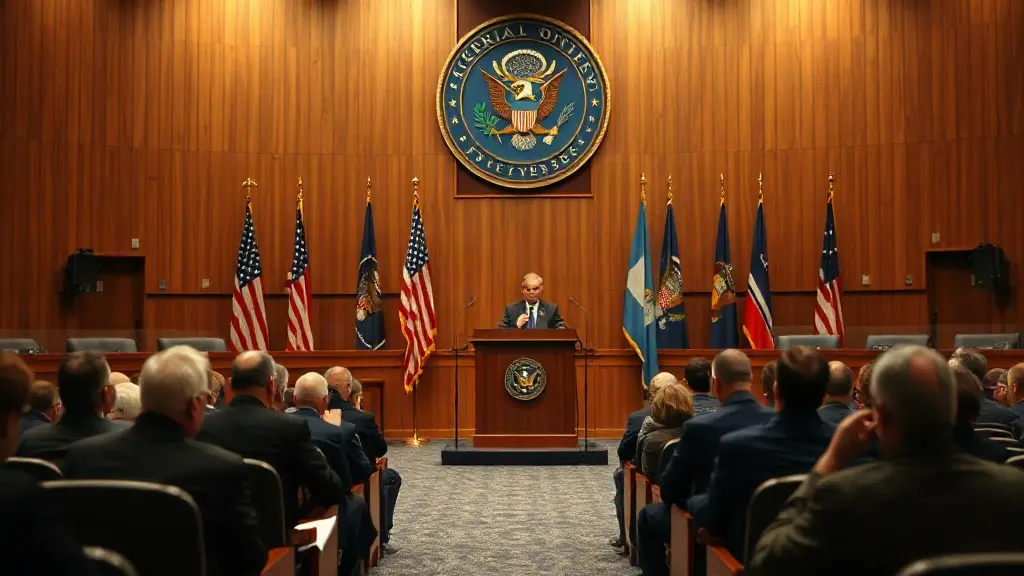
Key Provisions of the NDAA 2026 Mandate
The NDAA 2026 serves as a critical framework for the United States' defense policy and budgetary allocations. Section 8335 specifically addresses the delegation of authority, allowing designated officials within the Department of Defense (DoD) to exercise powers previously reserved for higher-level authorities. This delegation aims to streamline decision-making processes and enhance operational efficiency in defense-related activities.
The mandate outlines several key provisions:
- Authority Delegation: Designated officials can now make decisions on procurement, resource allocation, and operational directives without requiring prior approval from senior leadership.
- Compliance Requirements: Agencies must adhere to new compliance protocols to ensure that delegated authorities operate within the legal framework established by the NDAA.
- Oversight Mechanisms: The mandate introduces oversight mechanisms to monitor the exercise of delegated authority, ensuring accountability and transparency in defense operations.
Implications for Federal Agencies
The enactment of this mandate has far-reaching implications for federal agencies involved in defense operations. By delegating authority, the DoD aims to reduce bureaucratic delays and enhance responsiveness to emerging threats. However, this shift also raises concerns about the potential for misuse of power and the adequacy of oversight mechanisms.
Agencies are now tasked with revising their internal policies to align with the new delegation framework. This includes training personnel on the new compliance requirements and establishing protocols for reporting and oversight. The effectiveness of these changes will be critical in determining the overall impact of the mandate on defense operations.
Stakeholder Reactions and Concerns
Reactions to the federal mandate have been mixed among stakeholders. Defense industry leaders have expressed cautious optimism, highlighting the potential for increased efficiency in procurement and operational decision-making. However, advocacy groups and some lawmakers have raised concerns about the implications for accountability and oversight.
Critics argue that the delegation of authority could lead to decisions being made without adequate checks and balances, potentially compromising national security. They emphasize the need for robust oversight mechanisms to ensure that delegated authorities act within the bounds of the law and prioritize the public interest.
Compliance Timeline and Next Steps
As federal agencies begin to implement the provisions of the NDAA 2026 mandate, a clear compliance timeline has been established. Agencies are required to submit revised internal policies and training programs by January 15, 2027. This timeline allows for a structured transition to the new authority delegation framework, ensuring that all personnel are adequately prepared to operate under the new guidelines.
The federal regulatory authorities will conduct a review of agency compliance by March 31, 2027, assessing the effectiveness of the new protocols and making adjustments as necessary. This review will be crucial in determining the long-term viability of the authority delegation model and its impact on defense operations.
Conclusion
The delegation of authority under Section 8335 of the NDAA 2026 represents a significant shift in how federal agencies manage defense operations. While the potential for increased efficiency is evident, the need for stringent oversight and accountability remains paramount. As agencies navigate this new landscape, the effectiveness of the mandate will ultimately depend on their ability to balance operational agility with responsible governance.
| Parameter / Metric | Verified Detail | Practical Significance |
|---|---|---|
| Docket Number | 2026-22386 | Official identifier for tracking the mandate |
| Agency | Federal Authority | Governing body responsible for implementation |
| Publication Date | 2026-11-02 | Date of official publication in the Federal Register |
| Compliance Deadline | 2027-01-15 | Deadline for agencies to submit revised policies |
| Review Date | 2027-03-31 | Date for federal review of agency compliance |
What is the purpose of the NDAA 2026 mandate?
The NDAA 2026 mandate aims to delegate authority within the Department of Defense to streamline decision-making and enhance operational efficiency.
What are the compliance requirements for federal agencies?
Agencies must revise their internal policies and training programs to align with the new authority delegation framework by January 15, 2027.
What are the implications of this mandate for oversight?
The mandate raises concerns about accountability, necessitating robust oversight mechanisms to monitor the exercise of delegated authority.