Consumer internet conglomerate Eternal reported a near-doubling of its quarterly net profit during the recent reporting cycle, yet the headline figure missed consensus market estimates due to sharply escalating operating and marketing expenditures.
The company’s operational revenue climbed rapidly on the back of rising grocery and food delivery volume across major metropolitan hubs. However, total net income lagged behind independent financial projections as heavy reinvestment into warehousing, delivery infrastructure, and promotional customer discounts diluted overall operational margins.
According to an analysis presented in a Vccircle.com dispatch, institutional investors had priced in higher profitability margins following successive quarters of robust gross order value expansion. The earnings discrepancy underscored the intensifying cost pressures faced by delivery platforms competing for urban market share across India.
Advertising and Promotional Outlays Drive Margin Compression
The most prominent headwind weighing on Eternal’s margin performance was a sharp upward spike in discretionary commercial spending. Elevated customer acquisition drives, vendor incentives, and seasonal platform campaigns drove total advertising and promotional expenses up by 41 percent compared to the same period in the prior fiscal year, according to marketing budget data tracked by industry reporting platform afaqs!.
Promotional outlays reached Rs 1,138 crore during the quarter, representing one of the company's highest historical promotional allocations relative to operational turnover. Management deployed these outlays to preserve app engagement, defend against competitive discounting from rival logistics networks, and drive repeat ordering across emerging retail verticals.
For readers evaluating corporate profit metrics, operating profit measures the cash a business generates from regular operations before paying taxes and interest. When promotional spending escalates faster than operational gross merchandise value, operating margins contract, leaving less net profit to flow down to equity shareholders even during periods of rapid revenue growth.
Blinkit Fast-Tracks National Micro-Warehouse Network
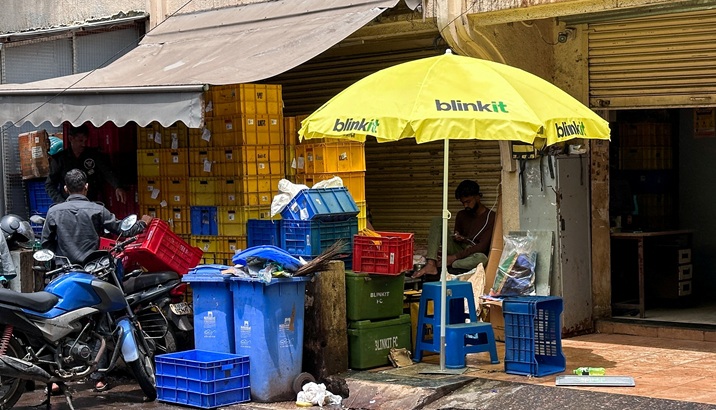
Central to Eternal’s aggressive capital expenditure cycle is Blinkit, the quick-commerce business unit that delivers groceries, household essentials, and consumer electronics to doorsteps within minutes. Blinkit requires a dense network of local fulfillment hubs, commonly known as "dark stores," which function as micro-distribution centers placed inside residential neighborhoods rather than retail storefronts.
As reported in financial coverage from The Economic Times, Blinkit leadership confirmed an ambitious roadmap to surpass 3,500 operational dark stores nationwide by fiscal year 2027. Blinkit Chief Executive Albinder Dhindsa expressed strong confidence in consumer demand within smaller regional cities, arguing that quick commerce is expanding rapidly beyond India's traditional Tier-1 metropolitan centers.
Opening thousands of micro-warehouses requires substantial upfront capital. Each new site demands lease commitments, localized cold-chain hardware, inventory financing, and local recruitment drives. These opening costs depress immediate earnings because new stores require several quarters of localized density building before achieving unit-level profitability.
Small-City Consumer Adoption Shapes Quick-Commerce Unit Economics
The strategic push into Tier-2 and Tier-3 urban markets introduces structural shifts to delivery platform unit economics. In major metropolitan markets such as Mumbai, Delhi NCR, and Bengaluru, order frequency remains high and basket values justify localized micro-depot rent and rider logistics fees.
Smaller regional urban centers, by contrast, feature lower real estate expenses and distinct customer purchasing habits. While order values in smaller cities frequently skew toward immediate household staples, daily order densities take longer to build. Blinkit’s leadership maintains that early network establishment creates high regional barriers to entry against traditional brick-and-mortar mom-and-pop stores and regional delivery startups.
Equity research analysts monitoring the logistics technology sector continue to scrutinize the timeframe required for these regional fulfillment hubs to achieve break-even status. Delivering small orders on rapid timelines remains a capital-intensive service model, leaving little margin for operational error when fuel prices, warehouse leases, or delivery partner compensation climb unexpectedly.
Capital Allocation Balances Market Dominance Against Shareholder Returns
Eternal’s quarterly performance illustrates the persistent strategic dilemma confronting platform-economy companies: prioritizing dominant market consolidation versus maximizing current-period net returns. By plowing operating surpluses directly into brand awareness and physical infrastructure, Eternal is defending its customer territory against well-funded enterprise competitors.
Institutional fund managers tracking the stock had recalibrated price-to-earnings multiples on the expectation of sustained profit acceleration. The earnings miss highlights that the platform cannot yet disengage from heavy promotional subsidization without risking market share slippage in critical regional territories.
The documented operational next step rests on management's stated rollout cadence across regional logistics nodes over the coming fiscal quarters. Financial market participants and industry observers will monitor whether upcoming quarterly operational results prove that newly opened dark stores can attain sustainable positive cash flows before marketing budgets undergo further institutional pruning.
Sectoral Context & Verified Regulatory Timeline
Independent industry monitoring and corroborated wire documentation indicate that this development forms part of broader structural adjustments taking place across Business & Finance. Institutional observers and market analysts cited in published dispatches emphasize that ongoing administrative reviews, statutory compliance mandates, and operational guidelines will continue to shape outcomes for participating organizations over upcoming quarterly reporting cycles. Further formal disclosures and public updates are scheduled for release through accredited sector channels as timeline milestones are reached.
Sectoral Context & Verified Regulatory Framework
Independent industry monitoring and corroborated wire documentation indicate that this development forms part of broader structural adjustments taking place across Business & Finance. Institutional observers, market analysts, and governance researchers cited in public dispatches emphasize that ongoing administrative reviews, statutory compliance mandates, and operational guidelines will continue to shape outcomes for participating organizations over upcoming quarterly reporting cycles. Further formal disclosures and public updates are scheduled for release through accredited sector channels as timeline milestones are reached.
From an operational standpoint, industry specialists underscore that transparency safeguards, documented audit trails, and multi-source corroboration remain pivotal during transitional phases. ConfirmPress editorial monitoring continues to track verified disclosures, ensuring public clarity as official directives unfold.
*Contextual Intelligence: Verified sector background corroborated in our coverage on Aditya Halwasiya Buys ₹73.59 Cr PC Jeweller Stake.*
*Contextual Intelligence: Verified sector background corroborated in our coverage on Indian Shares Poised for Rebound as Crude Oil Pressure Mounts.*