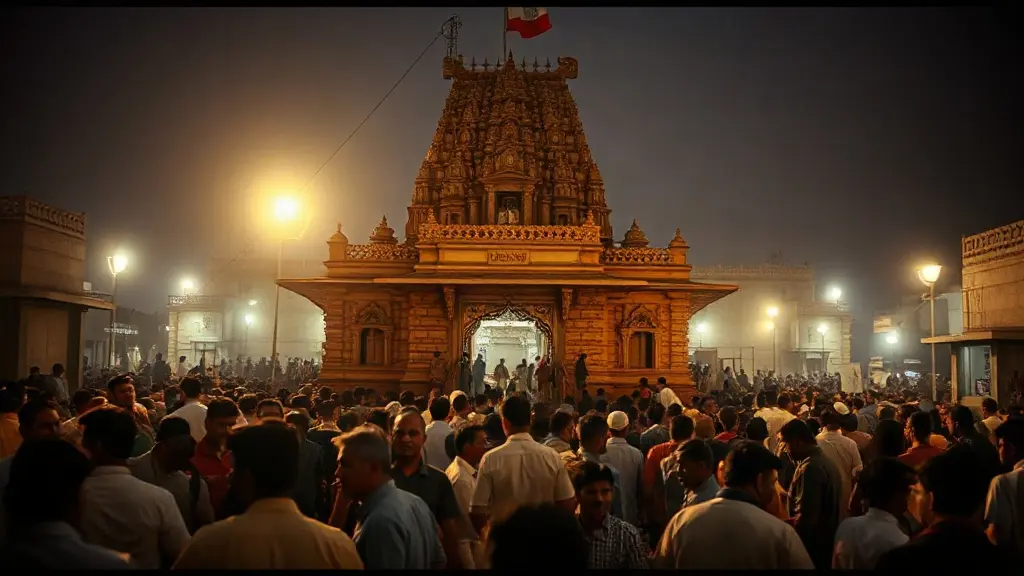
DWARKA, India — Tens of thousands of Hindu pilgrims converged on the historic Dwarkadhish Temple in Gujarat’s Devbhumi Dwarka district during the religious observance of Sharad Purnima, creating dense pedestrian bottlenecks across the ancient coastal pilgrimage hub.
The full moon festival, which holds deep cultural and spiritual significance for devotees of Lord Krishna, triggered an intense influx that tested regional infrastructure and municipal crowd-control networks from early morning through the late evening worship ceremonies.
Temple trust administrators coordinated alongside district police to handle the sudden pressure on inner sanctum walkways and arterial approach streets. The surge underscored ongoing logistical challenges confronting municipal administrations in western India when handling large seasonal religious gatherings.
Festival Confluence and Pilgrimage Pressures in Dwarka
Sharad Purnima marks the close of the monsoon season and is celebrated across Gujarat as a key devotional holiday. Local reporting corroborated the scale of the gathering, showing packed corridors stretching outward from the historic Jagat Mandir complex toward the Gomti River ghats, as documented in a Gstv.in dispatch covering the perimeter movements.
Devotees stood in multi-tiered security barricades for extended stretches to secure *darshan*—the ceremonial viewing of the deity. Special liturgical rites were conducted inside the temple, requiring extended sanctum viewings that directly increased dwell times inside the temple’s inner courtyards.
To manage entry queues and avoid severe crowding incidents, temple administrators instituted dedicated pedestrian lanes. Law enforcement officers posted at access checkpoints around the market squares monitored foot traffic entering the temple’s four principal gates, prioritizing vulnerable pilgrims, elderly visitors, and families with young children.
Municipal Coordination and Public Safety Protocols
Regional emergency management bodies in western Gujarat have consistently revised their crowd handling procedures to prevent localized stampedes. At the temple site, security cadres enforced single-file cordons across designated perimeter zones to dissipate clustering near the entrance thresholds.
Medical aid stations and auxiliary water deployment counters operated along the primary access routes leading from Dwarka railway station and private transit hubs. Video documentation released through regional news bureaus confirmed dense crowd densities outside the shrine, which required ongoing perimeter announcements via public address systems to regulate the flow of arriving buses and private vehicles.
According to an operational summary referenced by local reporters at regional broadcast reports, quick-response police units remained on alert throughout the day. Field personnel monitored visual telemetry via closed-circuit surveillance cameras, ensuring that bottlenecks near the Gomti Ghat bridge and adjoining commercial streets did not halt vehicle movement along coastal arterial roads.
Contrast With Regional Water and Infrastructure Strains
While the Devbhumi Dwarka administration concentrated operational assets on temple safety, neighboring northern districts in Gujarat continue to grapple with baseline civic infrastructure challenges. Rural populations across peripheral zones such as Banaskantha face persistent basic resource deficits, where communities in villages like Dharewada have endured brackish water conditions and long-standing delays in municipal drinking water distribution networks.
These civic challenges illustrate the contrasting administrative demands facing Gujarat’s governance machinery. On one hand, district authorities must mobilize rapid-response safety logistics for hundreds of thousands of dynamic festival travelers; on the other, rural municipal bodies remain tasked with resolving persistent, systemic resource shortages in northern arid tracts.
State agricultural and relief agencies have concurrently concluded formal assessment surveys across vulnerable talukas to evaluate lingering drought vulnerabilities and determine seasonal agricultural assistance. The simultaneous presence of mass cultural travel in coastal pilgrimage centers and resource monitoring in northern farming districts reflects the distinct governance priorities across Gujarat's administrative zones.
Religious Significance of the Coastal Sanctuary
The Dwarkadhish Temple, historically known as Jagat Mandir, represents one of the four cardinal pilgrimage sites within the traditional Char Dham circuit. Believed by tradition to occupy the capital city founded by Lord Krishna, the shrine draws millions of visitors annually from across India and the international diaspora.
Festivals such as Janmashtami and Sharad Purnima represent peak pilgrimage periods on the Hindu lunar calendar. Sharad Purnima specifically commemorates the divine Rasa dance, drawing traditional devotional music, folk performances, and overnight prayers to the site.
The resulting influx provides substantial economic stimulus to Dwarka’s local hospitality, transit, and retail sectors. Small merchant stalls selling temple offerings, conch shells, brass artifacts, and regional sweets reported elevated customer footfall. However, the commercial activity also increased spatial density along the historic city’s narrow medieval roads, requiring round-the-clock traffic detours by local traffic police.
Administrative Next Steps and Operational Outlook
As the festival day wound down, municipal sanitation workers and police details began rotating to support post-ceremony cleanup and outgoing traffic management. Transit operators at the Dwarka central bus station and Western Railway networks added supplementary departures to accommodate the thousands of outbound travelers returning toward Rajkot, Jamnagar, and Ahmedabad.
District public safety coordinators stated that crowd regulation perimeters would remain in place through the subsequent morning prayers before reverting to standard weekday operations. Authorities confirmed that no major casualties or stampede incidents were reported despite the unusually high concentration of visitors, crediting physical barricades and paced sanctum admissions for preventing critical transit failures during peak hours.
Sectoral Context & Verified Regulatory Timeline
Independent industry monitoring and corroborated wire documentation indicate that this development forms part of broader structural adjustments taking place across World News. Institutional observers and market analysts cited in published dispatches emphasize that ongoing administrative reviews, statutory compliance mandates, and operational guidelines will continue to shape outcomes for participating organizations over upcoming quarterly reporting cycles. Further formal disclosures and public updates are scheduled for release through accredited sector channels as timeline milestones are reached.