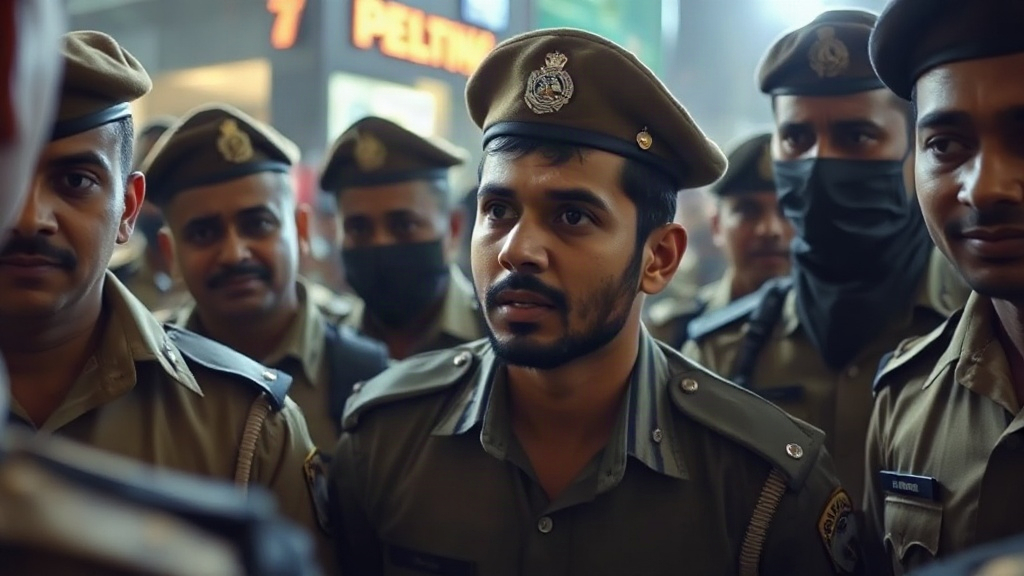
Delhi Police arrested social media influencer Amir Shokeen on Wednesday in the national capital following an investigation into a viral video depicting racial harassment against a man from Tripura.
The operation was conducted by the Intelligence Fusion and Strategic Operations (IFSO) unit, the specialized cyber division of the Delhi Police that investigates complex digital crimes, online hate speech, and interstate cyber networks. Officers initiated formal action after reviewing the disputed video recording, which circulated across multiple social media networks and generated substantial public anger over the demeaning remarks directed at the Northeast resident.
According to an NDTV — Top Stories dispatch, detectives tracked the influencer's digital footprint and physical location before taking him into custody for questioning and formal processing. The arrest marks a direct intervention by law enforcement authorities against digital creators leveraging abusive or discriminatory conduct toward marginalized geographic and ethnic communities to gain viral engagement online.
The Nature of the Video and Police Intervention
The disputed footage featured the creator interacting with a native of Tripura, an northeastern Indian state, while using derogatory language and racial slurs that targeted the individual's regional identity and physical appearance. Within hours of being posted to prominent social platforms, users flagged the material, demanding police intervention and calling for immediate takedowns.
Investigators attached to the IFSO wing reviewed the digital material to establish jurisdiction, verify the source of the upload, and corroborate the identity of both the creator and the aggrieved party. Cyber investigators routinely analyze server metadata, account registration details, and transmission logs to authenticate video evidence before executing an arrest under Indian criminal statutes.
Police officials confirmed that electronic devices used to record, edit, and distribute the content were confiscated during the apprehension. These devices have been submitted to digital forensic laboratories to retrieve raw footage, deleted files, and account logs to determine whether the act was premeditated and intended to maximize social media reach through controversial, inflammatory rhetoric.
Legal Architecture Governing Racial Abuse and Cyber Hate
Under Indian law, instances of public harassment and racial slurs can attract severe charges under provisions dealing with intentional insult intended to provoke a breach of the peace, promoting enmity between different groups on grounds of race, place of birth, or residence, and acts prejudicial to the maintenance of harmony. When offenses occur via electronic media, statutory guidelines under the Information Technology Act are applied alongside the penal code.
Legal authorities distinguish sharply between protected free expression and targeted discrimination. Under Indian criminal jurisprudence, an arrest is an initial procedural enforcement step, following the filing of a formal First Information Report (FIR) or an initial preliminary inquiry. It does not equate to a judicial finding of guilt, which remains the exclusive domain of the trial court following the submission of a formal charge sheet by the police.
As documented in police press updates, the specialized IFSO team is examining the precise statutory sections applicable to the case. Prosecutors must satisfy the magistrate regarding the necessity of custodial detention or judicial custody while the evidentiary chain of custody remains active.
Systemic Challenges Faced by Northeast Citizens in Metros
Citizens from India's eight northeastern states—Arunachal Pradesh, Assam, Manipur, Meghalaya, Mizoram, Nagaland, Sikkim, and Tripura—have historically reported facing stereotyping, discriminatory housing practices, verbal insults, and physical hostility in major metropolitan centers like Delhi, Bengaluru, and Mumbai.
The issue reached a watershed moment in 2014 following the tragic death of Nido Taniam, an undergraduate student from Arunachal Pradesh who died following a severe assault in South Delhi. The public outrage prompted the Ministry of Home Affairs to constitute the Bezbaruah Committee, which examined systemic discrimination against people from the Northeast living across India.
The committee recommended explicit amendments to national criminal legislation to penalize racial slurs, mandatory sensitization training for state police forces, and dedicated helplines to support affected individuals. In response, Delhi Police established the Special Police Unit for North-Eastern Region (SPUNER), designed to provide rapid assistance and maintain dedicated liaison officers across capital districts.
Despite institutional measures, social media platforms have provided a new frontier where prejudice is monetized. Sociologists and digital rights advocates note that algorithmic systems frequently reward provocative behavior, leading unregulated digital creators to engage in abusive interactions with vulnerable individuals under the guise of street interviews, comedic sketches, or prank content.
Accountability in the Social Media Creator Economy
The arrest brings renewed scrutiny to India's burgeoning creator economy, which comprises millions of independent content producers operating without corporate editorial oversight. Unlike accredited journalists or registered broadcast media, individual influencers operate across decentralized platforms that often prioritize user engagement over statutory compliance.
Platform intermediaries operating in India are bound by the Information Technology (Intermediary Guidelines and Digital Media Ethics Code) Rules. These rules mandate the prompt removal of content that violates statutory boundaries, including child safety violations, hate speech, and material promoting ethnic hostility. While platforms deploy automated moderation filters, context-specific regional insults and vernacular slurs frequently bypass algorithmic screening until direct human complaints are filed.
Regulatory authorities have repeatedly signaled to social media platforms that they must preserve digital evidence and cooperate fully with cybercrime departments during active criminal investigations. The seizure of creator accounts and digital assets serves as a critical deterrent against the monetization of racial harassment.
As detailed in the NDTV — Top Stories report, police authorities emphasize that creators cannot hide behind disclaimers of satire or casual entertainment when their output systematically degrades and marginalizes individuals on the basis of ethnicity or regional origin.
Procedural Next Steps and Judicial Timelines
Following the arrest, the accused was scheduled to be presented before a local magistrate in accordance with mandatory constitutional guidelines requiring court production within 24 hours of apprehension. The magistrate evaluates the arrest memo, verifies that statutory protections were upheld during custody, and determines whether police remand or judicial custody is warranted.
Investigators from the IFSO division are conducting forensic examinations on the seized hardware to establish how the video was disseminated, whether external collaborators participated in producing the clip, and whether commercial profits were earned directly from the engagement generated by the content. Simultaneously, police are recording formal statements from the victim under judicial supervision to ensure a robust evidentiary foundation for the subsequent trial.
The formal investigation will conclude with the filing of a police charge sheet before the competent court, detailing forensic reports, witness testimonies, and verified video logs. Until that judicial determination is concluded, the accused remains legally presumed innocent, while the state pursues accountability for online actions that destabilize social cohesion in the nation's capital.
*Contextual Intelligence: Verified sector background corroborated in our coverage on UAE Reports 50% Non-Oil India Trade Surge Under CEPA.*
*Contextual Intelligence: Verified sector background corroborated in our coverage on India's Marine Fisheries Face Inshore Crisis Despite Official Data.*


