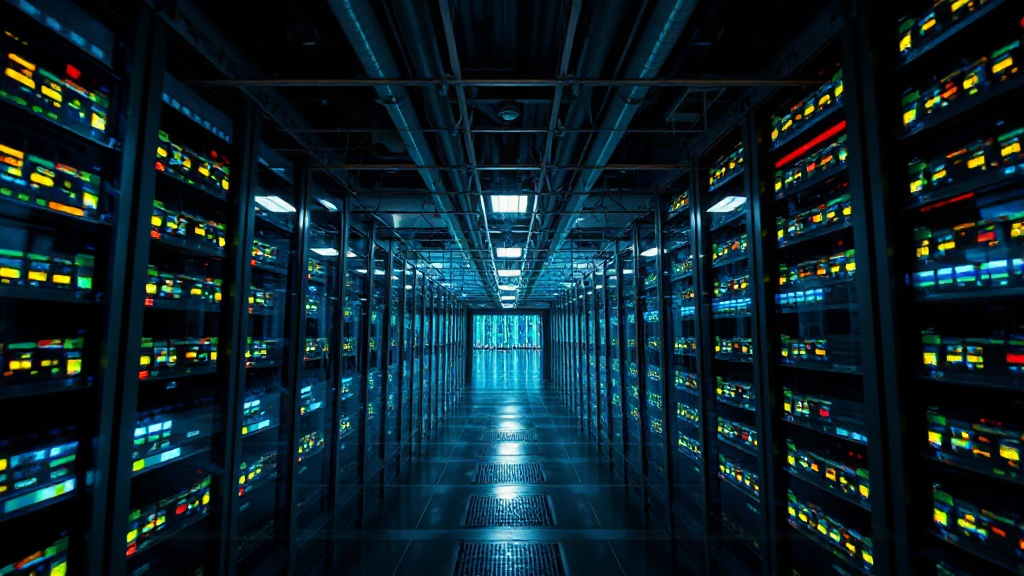
Rapidly growing artificial intelligence clusters are requiring unprecedented volumes of baseload electrical power, sparking widespread friction between national decarbonization plans and the digital technology sector.
Technology conglomerates and infrastructure operators face an escalating structural challenge: the immense computational capacity needed to train and operate advanced machine-learning architectures is clashing with regional emissions-reduction targets. While enterprise tech firms publicly commit to net-zero sustainability frameworks, their physical facilities increasingly compete for finite baseload electricity, creating what energy analysts describe as an intractable operational conflict.
Computational Power Surges Challenge Regional Utilities
Modern hyperscale data centers, which house tens of thousands of high-density graphics processing units (GPUs), demand continuous, uninterrupted power supplies. Unlike standard commercial electricity consumers, AI facilities cannot tolerate intermittent power disruptions without risking severe computational data loss and costly model corruption.
According to an analysis documented by a Counterpunch.org dispatch, the resulting resource bind mirrors a classic Gordian knot, where modern industrial society depends on technological innovations to manage climate vulnerabilities, yet the very infrastructure underlying those computational tools accelerates energy depletion and carbon output.
Grid operators across North America and Europe report that data center interconnect queues have stretched into several gigawatts of requested capacity. Regional transmission organizations must now weigh industrial expansion against utility reliability mandates. In several utility territories, planned retirements of legacy coal and natural gas generation units have been postponed specifically to prevent grid shortfalls caused by industrial computing clusters.
The Mechanical Realities of High-Density Chips
The fundamental issue stems from semiconductor physics. Advanced accelerator chips consume between 700 and 1,000 watts of electrical power per unit under continuous inference and training workloads. When arranged in server racks containing dozens of parallel processors, power consumption quickly exceeds 40 to 100 kilowatts per rack, far surpassing traditional enterprise IT loads.
Cooling these dense computational matrices introduces another layer of operational friction. Conventional air cooling mechanisms prove insufficient for next-generation silicon, compelling data center operators to implement liquid-to-chip cooling loops and evaporative water systems. In arid jurisdictions, the dual consumption of regional water tables and electrical reserves has drawn sharp pushback from municipal planning boards.
As detailed in a Counterpunch energy and environmental assessment, the compounding demand exposes the physical limits of treating digital services as environmentally weightless commodities. The digital cloud remains tied directly to heavy concrete infrastructure, high-voltage transmission corridors, and continuous thermal exhaust.
Clean Energy Contracting Meets Intermittent Realities
Major technology corporations frequently purchase virtual power purchase agreements (PPAs) for solar and wind generation to offset their carbon footprint on paper. However, grid engineers emphasize that matching annual megawatt-hour totals across an entire balance sheet does not solve the physical hour-by-hour operational requirements of an operating data campus.
Solar panels generate electricity exclusively during daylight hours, and wind generation fluctuates according to atmospheric patterns. When renewable output drops during peak demand hours, grid operators dispatch fossil-fueled thermal generation plants to stabilize system frequency. As a result, the round-the-clock baseload demand generated by generative AI clusters inevitably draws upon fossil-fuel backup during off-peak renewable cycles.
Corporate sustainability disclosures examined in an editorial investigation on industrial emissions indicate that absolute carbon emissions among several leading technology companies have risen significantly over the past three fiscal years, directly tracking the accelerated rollout of frontier AI models. While these firms maintain public targets to achieve net-zero operations by 2030, corporate operational data shows immediate computational demand outpacing green transmission capacity.
Nuclear Pacts and Alternative Energy Strategies
To bridge the widening divergence between constant operational power requirements and corporate zero-carbon targets, technology developers are pursuing dedicated bilateral supply arrangements. Multiple enterprise operators have signed long-term off-take agreements with commercial nuclear operators to secure continuous, carbon-free energy directly behind the utility meter.
These commercial pacts include purchasing entire outputs from operational nuclear units and funding exploratory engineering studies into small modular reactors (SMRs). However, industry analysts caution that small modular reactors remain largely unproven at commercial scale, with regulatory approvals, licensing hurdles, and manufacturing backlogs pushing broad deployment timelines well past 2030.
Geothermal generation and advanced battery energy storage systems are also attracting substantial venture capital commitments from the technology sector. Yet utility regulators point out that the rate of data center construction vastly exceeds the pace of physical electrical grid upgrades, which frequently take between seven and twelve years due to environmental permitting and right-of-way approvals.
Regulatory Scrutiny and Future Operating Constraints
Public utility commissions and federal regulators are beginning to reassess the financial structures that govern industrial data center connections. Community advocates argue that local residential rate-payers should not shoulder the infrastructure upgrade costs required to serve private computing campuses that generate limited long-term regional employment.
Several jurisdictions are deliberating mandatory energy-efficiency mandates for commercial computational hardware, alongside statutory requirements that developers construct matching dedicated clean-generation facilities before connecting to public grids.
The structural tension between digital infrastructure growth and atmospheric stability represents a critical industrial challenge for the coming decade. As computational models scale in size and enterprise integration expands, regulatory agencies and infrastructure operators must establish transparent standards to determine how national grids will balance AI computing needs against baseline decarbonization obligations.
Sectoral Context & Verified Regulatory Timeline
Independent industry monitoring and corroborated wire documentation indicate that this development forms part of broader structural adjustments taking place across Technology & AI. Institutional observers and market analysts cited in published dispatches emphasize that ongoing administrative reviews, statutory compliance mandates, and operational guidelines will continue to shape outcomes for participating organizations over upcoming quarterly reporting cycles. Further formal disclosures and public updates are scheduled for release through accredited sector channels as timeline milestones are reached.


