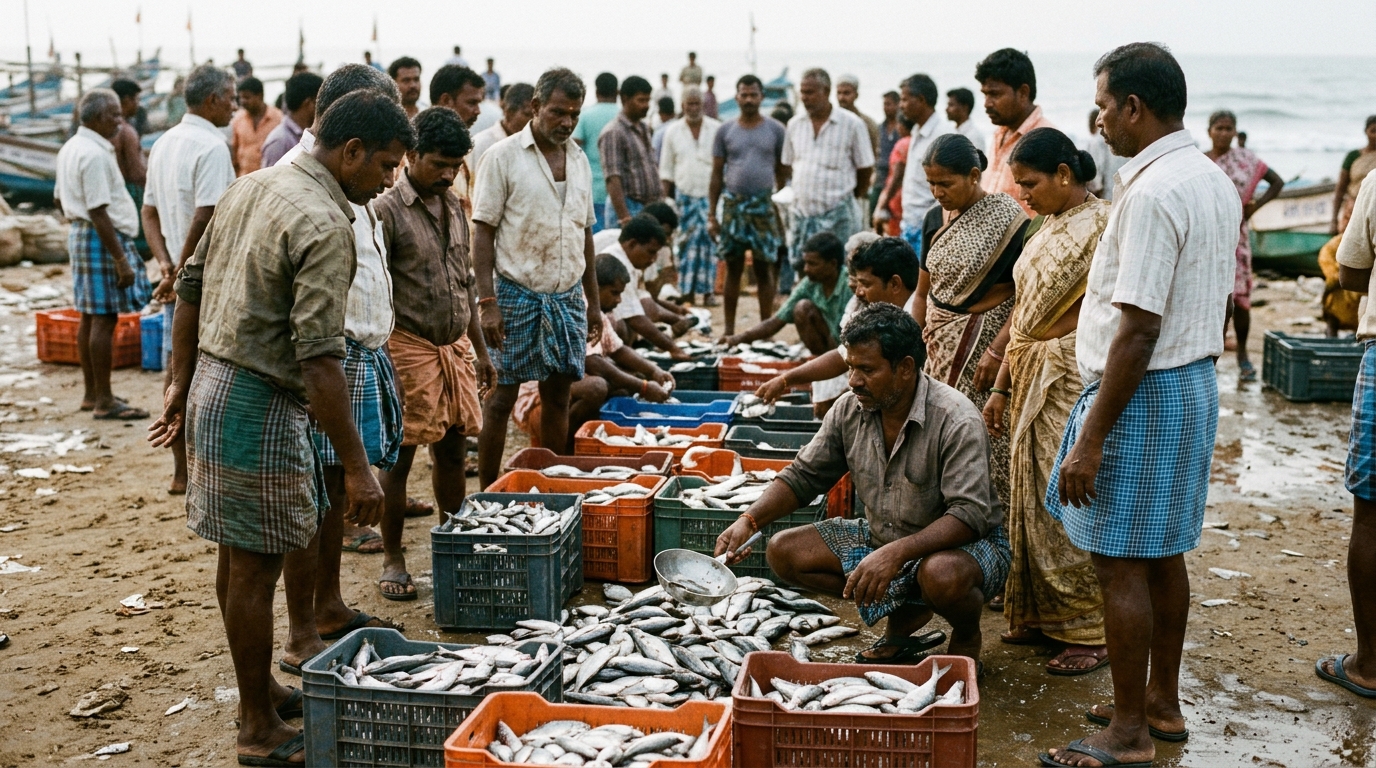
Large crowds gathered at Chennai’s primary seafood trading hub at Kasimedu early Sunday morning, braving steady monsoon downpours as retail and wholesale fish purchases surged following the official conclusion of the Tamil month of Purattasi.
Buyers and commercial vendors arrived before dawn at the Kasimedu fishing harbour in coastal Chennai, capital of India's southern state of Tamil Nadu, ending a month-long regional slump in animal protein consumption. Ground visual reporting broadcast via a Zee Tamil News Kasimedu video dispatch documented packed auction halls and flooded wharves where transactions proceeded without interruption despite active coastal weather.
The Purattasi Calendar and Market Cycles
The annual cycle of Purattasi—spanning mid-September to mid-October on the traditional Tamil calendar—is observed by millions of households through strict vegetarianism. Dedicated to the deity Venkateswara, the period typically prompts a steep downward shift in consumer demand across meat and fish wholesale distribution chains throughout southern India.
During this four-week window, regional retail counters frequently operate at reduced capacities while deep-sea fishing crews modify their landing schedules to avoid price collapse. The end of the month inevitably triggers pent-up consumer appetite, sending volumes sharply upward within hours of the calendar change.
Regional press coverage corroborated this market transformation across multiple trade centers. Separate retail monitoring highlighted by the Daily Thanthi market survey noted brisk commercial trade extending past coastal points into inland municipal butcheries and neighborhood retail outlets.
Monsoon Downpours Fail to Deter Consumer Footfall
Sunday’s commercial surge coincided with widespread precipitation across the northern coastal districts of Tamil Nadu. Persistent squalls associated with seasonal northeast monsoon patterns typically discourage open-air markets, yet crowds at Kasimedu began assembling well before 04:00 local time.
Vehicular congestion formed along the coastal arterial roads leading into Royapuram and Chennai Port as motorized three-wheelers, small commercial trucks, and domestic retail buyers sought access to the landing quay. Auctioneers at the central stalls moved through catch crates under plastic tarpaulins to protect shipments from rain damage.
Trade tallies compiled by a Dinamalar commercial retail bulletin affirmed that consumer purchasing momentum spread statewide, with poultry and mutton stalls matching the heavy turnover seen in marine seafood corridors.
Marine Supply and Pricing Dynamics
The Kasimedu complex serves as the epicenter of marine logistics for Chennai, processing hundreds of metric tons of fish daily during peak operational windows. Trawlers docking along the wharf land high-value commercial species including seer fish (vanjaram), pomfret, prawns, and red snapper, which are then distributed toward local neighborhood markets.
Because the reopening of non-vegetarian consumption matched heavy weekend demand, initial asking prices for premium varieties rose above regular midweek levels. Mechanized boat operators noted that despite the stormy sea conditions characterizing the outer Bay of Bengal, returned vessels cleared their holdings rapidly.
Logistical disruptions were largely avoided because ice-packing facilities and local transport links remained functional despite roadside water accumulations around the harbor complex.
Next Steps for Harbor Operations
Port and municipal authorities are continuing to monitor crowd control and sanitary clearance at Kasimedu as post-Purattasi trading runs through the upcoming week. Harbor management officials are scheduling regular drainage maintenance to manage monsoon pooling across the wholesale platforms as daily mechanized boat arrivals continue.